Flour, Water, and a Little Obsession: The Home Baker's Honest Guide to Making Real Bagels
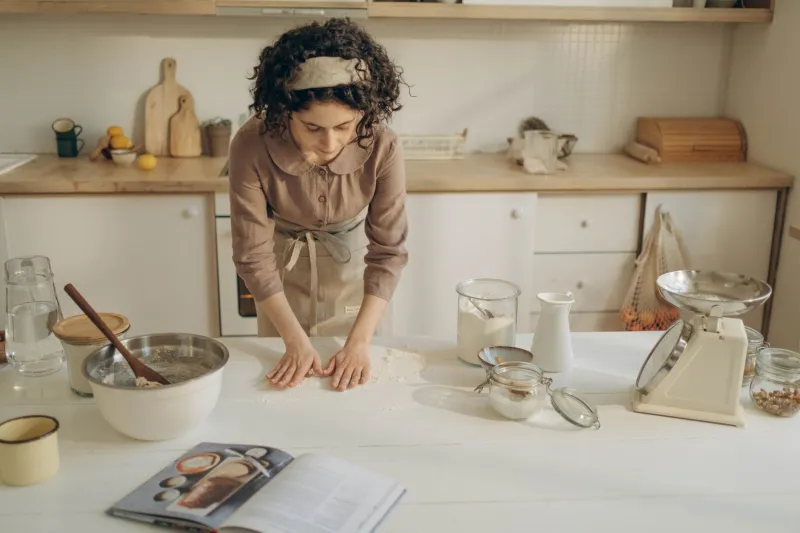
Let's be straight with you: making bagels at home is not the easiest weekend project you'll ever take on. It's not sourdough pancakes. It's not banana bread. It asks something real of you — patience, attention, and a willingness to get your kitchen a little messy on a Saturday morning. But here's the thing nobody tells you until you're elbow-deep in high-gluten dough: it's also one of the most satisfying things you can do with a free afternoon and a working oven.
The home bagel movement has been quietly building for years, and it's not slowing down. What used to feel like a project reserved for die-hard bread nerds has become genuinely accessible — and the results, when you get it right, are remarkable.
Why Home Bakers Are Taking This Seriously Now
A lot of people picked up bread baking during the pandemic and never really put it back down. Sourdough was the gateway drug, and now a whole generation of home bakers is ready for something more technical. Bagels fit that craving perfectly.
They're not complicated in the way that croissants are complicated — you don't need laminated dough or precise temperature-controlled environments. But they do reward you for paying attention. The fermentation window matters. The boiling step is non-negotiable. The shaping takes practice. That combination of accessible and demanding is exactly what a certain kind of home baker lives for.
There's also something deeply personal about it. When you make a bagel from scratch, you start to understand why the good ones taste the way they do. You get a felt sense of what "properly developed gluten" actually means, and you understand why a bagel that skips the boil just tastes like a bread roll pretending to be something it's not.
The Techniques That Actually Make a Difference
If you've tried homemade bagels before and been disappointed, the issue almost certainly came down to one of three things: the flour, the fermentation, or the boil. Let's break those down.
Flour matters more than you think. All-purpose flour will get you somewhere, but bread flour — or better yet, high-gluten flour — gets you to the real destination. That chew, that slight resistance when you bite through, comes from gluten structure. Higher protein content builds stronger gluten networks. If you're serious about this, look for flour with at least 13–14% protein content. King Arthur's bread flour is easy to find and does solid work. Some dedicated home bakers mail-order high-gluten flour specifically for bagel projects.
Cold fermentation is your friend. The overnight fridge method is where home bakers have started closing the gap with professional results. After shaping your bagels, park them in the refrigerator for 12 to 24 hours before boiling and baking. That slow, cold fermentation develops flavor complexity that a same-day bake simply can't replicate. It also gives the dough structure time to firm up, which makes shaping easier and helps the bagels hold their form through the boil.
Don't skip the boil — and don't rush it. This is the step that separates bagels from everything else. Boiling the shaped dough in water with a little barley malt syrup (or honey, in a pinch) creates that characteristic shiny crust and sets the exterior before the bagel ever hits the oven. Thirty to sixty seconds per side is the standard range. Longer boils produce a chewier, denser crust. Shorter boils yield something closer to a soft pretzel texture. Neither is wrong — it's about what you're going for.
What Bagel Shop Owners Actually Think About This
Here's a question worth asking: do the people who make bagels professionally feel threatened by home bakers getting good at this? The answer, pretty consistently, is no — and the reasoning is worth understanding.
The owners and bakers who've built their shops around craft and quality tend to see home bagel-making as a kind of gateway. When someone spends a weekend wrestling with high-gluten dough, shaping rings, and monitoring a boiling pot, they come away with a new appreciation for what goes into the professional version. They become better customers — more curious, more discerning, more willing to pay for something made right.
There's also the simple reality that a home baker working in a standard kitchen oven is operating under very different conditions than a shop running a commercial deck oven at high heat with consistent steam. The results can be genuinely excellent, but they're rarely identical to what comes out of a place that's been dialing in the same process for years. And that's okay. That gap is part of what makes the professional version worth seeking out.
The home baker who makes bagels on Sunday mornings isn't the person who stops going to their local shop — they're usually the person who becomes a regular.
When Store-Bought (or Shop-Bought) Still Wins
Let's be honest about this part, because intellectual honesty is more useful than cheerleading.
If you need six dozen bagels for a Sunday morning office spread, you are not making those at home. If you want an everything bagel with that specific combination of sesame, poppy, dried garlic, dried onion, and coarse salt in exactly the right ratio, you're probably not going to nail it on your first attempt. If it's Tuesday morning and you want a bagel before work, the math on firing up your oven at 5 a.m. does not work in your favor.
The shop exists for a reason. It exists because professionals with years of practice, the right equipment, and a genuine passion for the craft are doing something that takes real commitment to replicate at home. Supporting those shops — especially the independent, neighborhood spots that are making bagels the right way — matters.
Home baking and local shops aren't in competition. They're part of the same culture.
A Starting Point for the Ambitious Weekend Baker
If you're ready to try this, here's a simple framework to work from:
- Mix your dough with high-gluten flour, water, salt, a small amount of sugar or malt syrup, and instant yeast. Keep hydration low — bagel dough is stiff, not soft.
- Knead thoroughly. You want a smooth, tight dough. This takes longer than you'd expect, especially by hand.
- Shape into rings by rolling into ropes and joining the ends, or by poking a hole through a ball of dough and stretching it gently.
- Cold ferment overnight in the refrigerator on a lightly oiled sheet pan, covered loosely.
- Boil the next morning in water with barley malt syrup, then top with whatever you love — sesame seeds, everything seasoning, sea salt, poppy seeds.
- Bake hot — 450°F or higher — until deep golden brown.
The first batch probably won't be perfect. The second one will be better. By the time you've made four or five batches, you'll have learned something real about bread, about patience, and about why a properly made bagel deserves the attention it gets.
And when you want the version that's been perfected over years of practice? You know where to find us.