More Than a Morning Stop: How NYC Bagel Shops Became the Neighborhood's Living Room
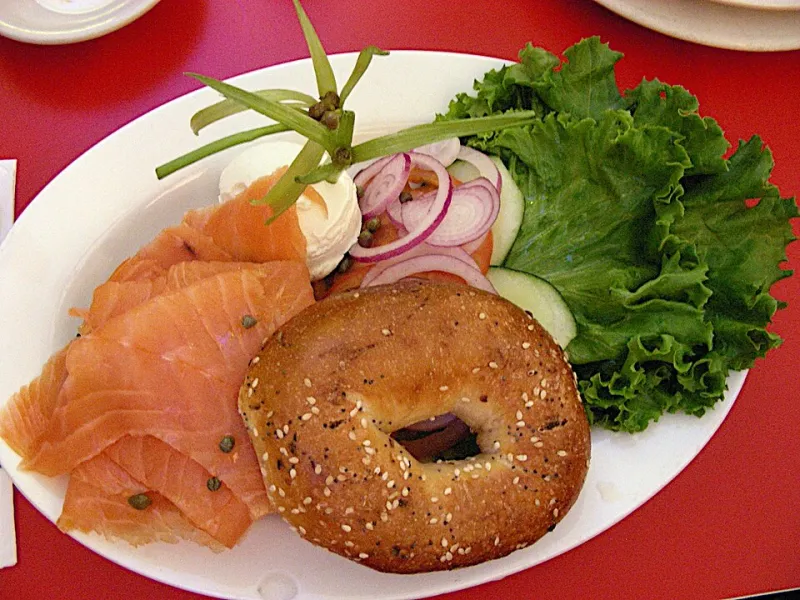
Photo: Kristina D.C. Hoeppner, CC BY-SA 2.0, via Wikimedia Commons
There's a sociologist's term for it — "third place" — that describes any communal spot that isn't your home and isn't your job. Think the classic corner bar, the barbershop, the diner booth where the same crew shows up every Saturday. For a growing number of New Yorkers, that third place smells like warm dough and toasted sesame seeds. It's the local bagel shop.
What's happening across the five boroughs right now isn't just a food trend. It's a quiet cultural shift. Independent bagel shops — the kind that hand-roll their dough and know your order before you open your mouth — are stepping into a role that goes way beyond feeding people. They're becoming anchors in neighborhoods that sometimes feel like they're coming apart at the seams.
Why "Third Places" Matter More Than Ever
Urban sociologist Ray Oldenburg first mapped out the concept of third places back in the 1980s, arguing that communities without them tend to feel hollow, disconnected. Fast forward forty years, and New York City is a case study in what happens when those spaces disappear. Pandemic closures gutted corner spots. Remote work emptied offices and reshuffled foot traffic. Rising rents pushed out the mom-and-pop places that once gave neighborhoods their personality.
Into that vacuum stepped — maybe unexpectedly — the bagel shop.
"People come in here and they don't want to leave," says one owner of a small shop in Astoria, Queens, who's been behind the counter for over a decade. "They're not just eating. They're talking to each other, introducing themselves, asking about each other's kids. I didn't set out to run a community center, but that's kind of what this place became."
It makes a certain kind of sense. Bagel shops have always had a particular rhythm — unhurried, unpretentious, welcoming. There's no dress code. Nobody's going to judge you for nursing a single coffee for ninety minutes. The price point keeps things accessible. And there's something almost ceremonial about the morning bagel run that invites repetition, routine, and the kind of casual familiarity that builds real community over time.
Regulars Who Became Regulars with Each Other
Ask any longtime bagel shop regular and they'll tell you: the relationships you build in line or at a shared counter are surprisingly real.
Marcus, a freelance graphic designer who works remotely from a Brooklyn shop three mornings a week, puts it simply. "I know more people from this bagel place than I do from my actual apartment building. There's a retired teacher who sits near the window. A nurse who comes in after night shifts. We talk. We check in on each other. That doesn't happen by accident — the place makes it happen."
That sense of belonging isn't something these shop owners necessarily planned for, but many have leaned into it deliberately. Some have added a few extra tables. Others put up a community bulletin board, stock local newspapers, or deliberately slow down the counter experience just enough to let conversations breathe. Small choices, but they send a signal: you're welcome to stay.
The Architecture of Belonging
There's a design element to this too. The best bagel shops have a layout that almost forces you into proximity with strangers — long counters, tight tables, a line that winds through the room. Unlike a coffee chain where everyone faces a laptop screen in isolated pods, a well-designed bagel shop creates accidental togetherness.
"The line is part of the experience," explains one shop operator in the West Village. "People talk in line. They bond over what they're ordering. By the time they sit down, they're not strangers anymore."
That physical intimacy matters in a city where it's genuinely easy to live for years without knowing your neighbors' names. The bagel shop, almost by structural default, breaks that isolation down.
More Than Nostalgia
It would be easy to frame all of this as pure nostalgia — a longing for some imagined simpler New York. But that misses what's actually happening. The bagel shops drawing people in right now aren't trading on old-school imagery for its own sake. They're genuinely meeting a need that other types of businesses aren't.
Coffee chains are optimized for throughput, not lingering. Bars require a drink ticket to belong. Parks are great but weather-dependent and anonymous. The neighborhood bagel shop threads a needle: it's warm, it's cheap enough to visit daily, it's rooted in place, and it carries decades of cultural weight that gives it an instant sense of legitimacy.
At Tal Bagels NY, we feel that weight every single day. We see it in the couple who met in our line and now comes in together every Sunday. We hear it from the regulars who tell us this place is part of their weekly rhythm in a way that actually matters to them. That's not something we take lightly.
What This Means for the Future of the Neighborhood
Cities are constantly renegotiating what they are. New York especially. And as neighborhoods evolve — sometimes painfully — the places that endure tend to be the ones that serve more than a single function. The bagel shop that's also a gathering spot, a familiar face, a small daily ritual? That's a place worth protecting.
Shop owners who understand this aren't just selling food. They're selling continuity. Stability. A little piece of the city that still feels like it belongs to the people who live there.
So next time you walk into your favorite spot and the person behind the counter already knows your order, or you end up chatting with a stranger about the everything bagel they just ordered — take a second to appreciate what's actually happening. You're not just grabbing breakfast. You're participating in something the city genuinely needs.
And honestly? That's worth the extra few minutes in line.