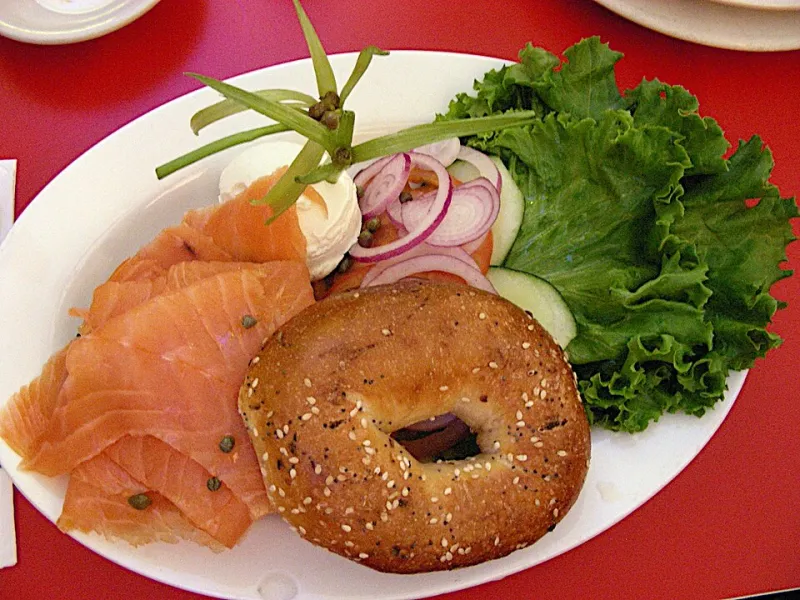
The Last Schmear: What's Really Threatening New York's Independent Bagel Shops
Photo: Internet Archive Book Images, No restrictions, via Wikimedia Commons
Walk into almost any independent bagel shop in New York City on a weekday morning and the scene looks the same as it always has. Steam rising off fresh-baked rounds. The low hum of conversation. A counter person who already knows your order. It feels permanent, like a fixture of the city itself.
But behind that comforting routine, something is shifting. Quietly, steadily, the economics that once made a small bagel shop a viable family business are turning against the people who run them. Rents are climbing. Flour prices are volatile. And the big guys — the chains with corporate backing and marketing budgets that dwarf a small shop's entire annual revenue — are getting closer.
This isn't a story about doom. But it is a story that New Yorkers who love their neighborhood shops need to hear.
The Numbers That Keep Shop Owners Up at Night
Running a bagel shop has never been a path to easy wealth. Margins in the food business are notoriously thin, and bagels — sold individually for a few dollars, or by the dozen — require volume to make the math work. For decades, the low overhead of modest storefronts in working-class neighborhoods made that math possible.
That calculus has changed dramatically. Commercial rents in many New York neighborhoods have roughly doubled over the past decade, and in some areas, the increases have been even steeper. A shop that once paid $4,000 a month for its space might now be looking at lease renewals north of $9,000 or $10,000. When your product sells for $2.50 a bagel, that kind of jump is existential.
At the same time, the cost of raw materials has swung wildly. The price of wheat flour — the foundation of every bagel — has experienced significant volatility in recent years, driven by global supply chain disruptions, shipping costs, and climate-related crop pressures. A shop that locked in supplier pricing in 2019 has faced a very different reality since. Cream cheese, too, hit record highs during a supply shortage that caught many small operators completely flat-footed.
"We couldn't raise our prices fast enough to keep up," one third-generation shop owner in the Bronx told us. "And honestly, we didn't want to. Our customers are working people. They shouldn't have to pay five dollars for a bagel and butter."
The Chain Problem
It would be easy to point at corporate bagel chains as the villain of this story, and there's something to that. A national chain can absorb losses at individual locations that would shutter an independent shop. They negotiate bulk ingredient pricing that small operators can't touch. Their loyalty apps and social media teams reach customers in ways that a hand-painted chalkboard sign simply can't.
But the competition isn't just coming from dedicated bagel chains. Upscale coffee shops, fast-casual breakfast spots, and even grocery store bakery departments have all moved into the morning carb market. Every one of those options is a bagel that someone didn't buy from their neighborhood shop.
What's lost when a local shop closes isn't just a convenient breakfast option. It's a relationship. The owner who remembers that you switched to whole wheat after your doctor's visit. The counter person who throws in an extra bialy because you're a regular. The community bulletin board by the door. These aren't things a chain can replicate, no matter how good their app is.
The Shops That Are Surviving — And How
Not every independent shop is in crisis. Some have found creative ways to adapt without sacrificing what makes them special.
Catering has become a meaningful revenue stream for shops willing to pursue it. Corporate breakfast orders, wedding spreads, and office bagel deliveries can provide the kind of volume and predictability that walk-in retail alone can't guarantee. A dozen bagels for a Tuesday morning meeting might seem small, but multiply that across regular clients and it starts to move the needle.
Others have leaned into their identity as community anchors. Hosting events, partnering with local schools, and participating in neighborhood markets builds the kind of loyalty that outlasts any competitor's grand opening promotion. When a shop is genuinely woven into the fabric of a community, people show up for it.
Online ordering and local delivery partnerships have also opened new doors, particularly for shops in neighborhoods where foot traffic has changed post-pandemic. Meeting customers where they are — even if that means a delivery app — has helped some shops reach regulars who no longer commute past the front door every morning.
What You Can Actually Do
This is the part of the article where we ask something of you, and we're going to be direct about it.
The most powerful thing you can do for a neighborhood bagel shop is spend money there — consistently, not just when you remember to. Not once a month when nostalgia hits, but as a genuine habit. Bring your office order there instead of the chain two blocks over. Buy a gift card when you're not sure what to get someone. Tell people about it.
Leave a review. It sounds small, but online reviews are one of the primary ways new customers discover local shops. A handful of genuine, specific reviews can make a real difference in visibility.
If you have the means, think about catering. Even a small order for a team meeting or a family gathering puts meaningful money directly into a local business and builds a relationship that tends to grow over time.
And finally, talk to your city council member. Zoning protections, small business lease stabilization, and targeted relief programs for independent food businesses are policy levers that exist — but only get pulled when constituents make noise about them.
The Bagel as a Barometer
There's something fitting about the fact that the bagel — a bread born from immigrant resourcefulness, shaped by hand, and sold cheap enough for everyone — is now a kind of barometer for New York's soul. When the independent shops disappear, something harder to name disappears with them.
At Tal Bagels NY, we think about this a lot. The bagel isn't just a product. It's a relationship between a maker and a community, built one morning at a time. That relationship is worth protecting.
So next time you're deciding where to grab breakfast, remember: your order is a vote. Cast it wisely.