Rolling Into Every Block: How Bagel Carts Are Bringing the Real Deal to Neighborhoods Big Bakeries Forgot
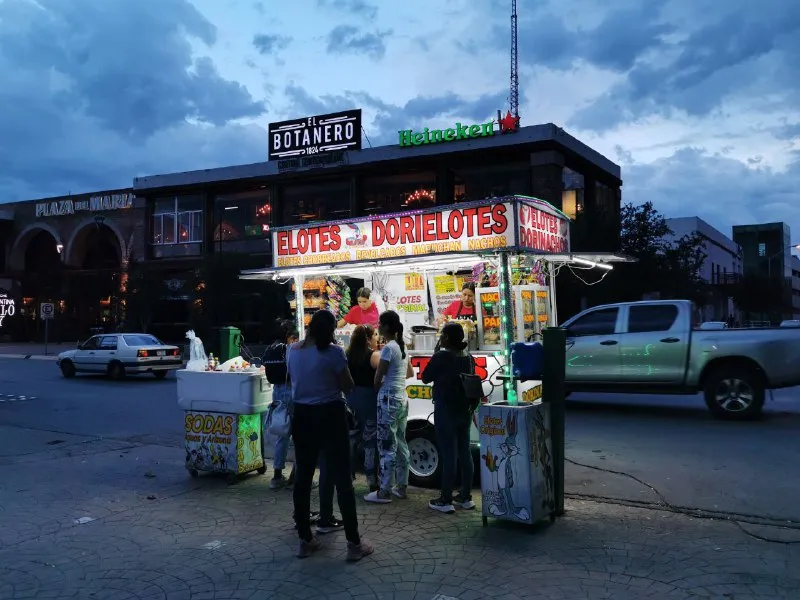
Photo: Wotancito, CC BY-SA 4.0, via Wikimedia Commons
There's a familiar rhythm to how artisanal food trends move through American cities. A craft bakery opens in a trendy neighborhood. Food writers show up. Instagram follows. Eventually, a second location opens — usually somewhere equally well-heeled. The cycle repeats, and certain zip codes get all the good stuff while everyone else makes do with whatever the nearest chain has on offer.
Bagels have been no exception to this rule. For years, the handcrafted, properly boiled, wood-fired or deck-oven-baked bagel has largely been a luxury of geography. You had to be close to the right shop to get the real thing. But a scrappy, growing cohort of mobile bagel vendors is starting to flip that script — one cart, one block, one underserved neighborhood at a time.
The Gap Nobody Was Talking About
Food deserts — areas with limited access to fresh, quality food — are a well-documented problem across the US. But within that conversation, there's a subtler issue that doesn't always get airtime: the artisanal food desert. These are neighborhoods where grocery stores exist, sure, but where the kind of small-batch, handcrafted food culture that defines places like the Lower East Side or Park Slope simply never arrived. Residents who want a genuinely great bagel — the kind with a real crust, a chewy crumb, and cream cheese that was made with actual care — either drive a long way or go without.
That's the gap a handful of entrepreneurs have started to notice and, more importantly, act on.
"I grew up in a neighborhood where the only bagels you could get were the pre-sliced, plastic-bag kind from the supermarket," says Marcus Webb, who runs a bagel cart called Dough on Wheels out of a converted utility trailer in a working-class section of the South Bronx. "I didn't taste a real New York bagel until I was nineteen. That felt wrong to me. It still feels wrong."
Webb spent two years learning to hand-roll and kettle-boil bagels before launching his cart three summers ago. He now parks in three rotating spots each week, including outside a community health clinic, near a public housing complex, and at a weekend farmers market that serves predominantly low-income families. His prices are deliberately kept accessible — significantly below what you'd pay at a sit-down artisan shop.
The Logistics Are Harder Than They Look
Running a mobile bagel operation is not the same as, say, a taco truck or a coffee cart. Bagels have specific production demands that don't simplify easily. The dough needs time — real fermentation, not a shortcut. The boiling step requires a kettle and enough water to actually do the job right. And the baking? That's where things get complicated on wheels.
Most mobile bagel vendors work in two phases. The dough is shaped and cold-proofed overnight in a commissary kitchen, then boiled and baked either in the commissary or in a purpose-built trailer oven before the cart heads out for the day. It's a logistical puzzle, but the vendors doing it well have figured out that the two-step process actually suits the mobile model — production happens off-site during off-hours, and service happens in the community during peak demand.
"People think mobile food is simpler than a brick-and-mortar. In some ways it is, in some ways it's way harder," says Deja Fontaine, who operates The Schmear Cart in parts of Newark, New Jersey, that she describes as chronically underserved by quality food options. "You're managing a commissary relationship, a vehicle, permits for multiple locations, and you're still trying to make a bagel that doesn't embarrass you. It's a lot."
Fontaine, who trained at a well-regarded bagel shop in Hoboken before striking out on her own, says the permitting process alone took nearly eight months. But she was determined. "The neighborhoods I serve, they deserve the same quality as anywhere else. That was never a question for me."
The Economics of Accessible Craft Food
One of the most interesting challenges these vendors navigate is the tension between keeping prices low enough to be genuinely accessible and covering the real costs of doing things the right way. High-quality flour, proper fermentation, fresh cream cheese — none of it is cheap. And unlike a fixed location with consistent foot traffic, a cart has to rebuild its customer base at every stop.
Some vendors have found creative solutions. Marcus Webb partnered with a local community development organization that subsidizes a portion of his costs in exchange for maintaining his pricing structure. Deja Fontaine runs a sliding-scale model on certain days, where customers who can afford to pay a little more effectively subsidize a discounted bagel for someone who can't. Others have leaned into catering weekend events — birthday parties, block associations, church brunches — to cross-subsidize their weekday community stops.
"The catering side is what keeps the whole thing financially viable," Fontaine explains. "It's also how I get the word out. People taste the bagels at an event, they start looking for the cart."
This dual-revenue approach mirrors what a lot of community-focused food businesses have figured out: serve the community at accessible prices, but build enough of a premium offering elsewhere to make the math work.
More Than Breakfast
What's striking about these mobile bagel operations is how quickly they become community fixtures. Webb describes regulars who started showing up not just for the food but for the conversation. A spot outside a public housing complex becomes an informal gathering point on Saturday mornings. The cart becomes a reason to linger, to talk to a neighbor, to feel like the neighborhood has something worth showing up for.
"Food does that," Webb says simply. "Good food especially. When you bring something real into a neighborhood that's been overlooked, people notice. They feel it."
That sense of being seen — of having quality food show up at your door rather than requiring a trek across town — is part of what makes this movement feel like more than a business trend. It's a statement about who deserves good bagels. (Spoiler: everyone.)
What the Rest of the Industry Could Learn
The mobile bagel vendors working in underserved communities aren't asking for the artisan food world to pat them on the back. They're just making bagels and showing up where they're needed. But their model does carry a quiet challenge for the broader industry: the idea that quality and accessibility don't have to be in opposition.
A handcrafted bagel, properly made, doesn't inherently have to cost $7. It costs that at certain shops because of rent, because of location, because of the business model built around a particular type of neighborhood. Strip that away, put the product on wheels, and suddenly the economics can shift — not easily, not without hustle, but enough.
For anyone who believes that a great bagel is one of life's genuinely democratic pleasures — the kind of simple, satisfying food that should be available to everybody — these carts feel like proof of concept. The dough is the same. The boil is the same. The schmear is the same.
The only thing that's different is where it shows up.
And that, it turns out, makes all the difference.