When the Pantry Runs Dry: How NYC's Bagel Shops Are Rewriting Their Most Sacred Recipes
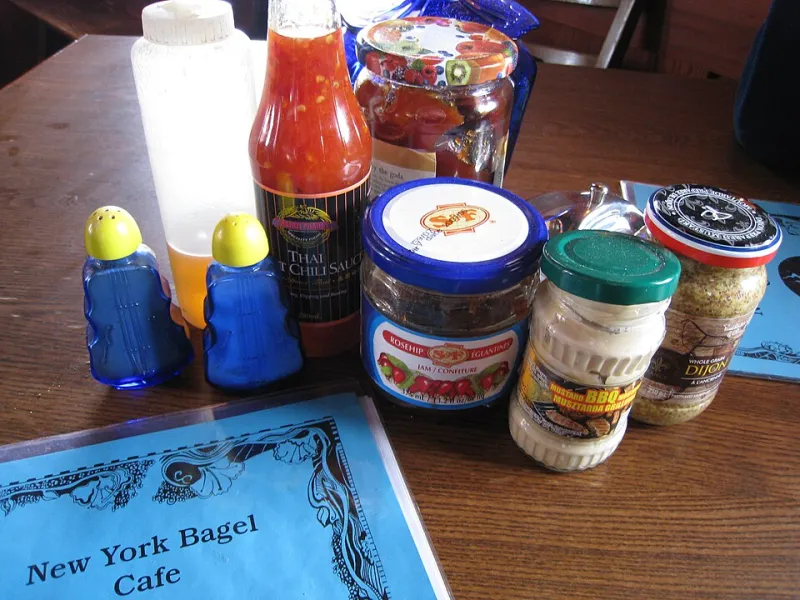
Photo: Mack Male from Edmonton, AB, Canada, CC BY-SA 2.0, via Wikimedia Commons
There's a certain kind of stubbornness that lives in the bones of a New York bagel baker. You don't mess with the recipe. You don't swap out the malt. You definitely don't skip the boil. These aren't just preferences — they're more like commandments passed down through generations of bakers who understood that a bagel, done right, is an act of precision.
But the last few years have tested that stubbornness in ways nobody predicted. Supply chain disruptions — the kind that started during the pandemic and, honestly, haven't fully resolved since — have been quietly forcing some of the city's most traditional shops to rethink what "authentic" actually means when the ingredients you've relied on for decades suddenly become unreliable, expensive, or just plain unavailable.
The Ingredient Problem Nobody's Talking About
Most bagel lovers don't think much about what goes into the dough before it hits the boiling water. But the sourcing side of bagel-making is more fragile than it looks. High-gluten flour, barley malt syrup, kosher salt — these aren't exotic ingredients, but they're surprisingly vulnerable to disruption.
Barley malt syrup, which gives a classic NYC bagel its subtle sweetness and that signature glossy crust, has been particularly tricky. A combination of agricultural pressures, shipping delays, and increased demand from the craft beer industry (which uses the same ingredient) created real shortages for small bakeries that don't have the purchasing power of larger operations. Some shops found themselves on waitlists. Others got price increases that made their already thin margins even thinner.
Kosher salt — a staple in almost every serious bagel kitchen — faced its own volatility. While it never disappeared entirely, inconsistent availability pushed some bakers to experiment with alternative salts or adjust their ratios in ways that, subtle as they sound, can actually shift the flavor profile of the finished product.
And then there's the flour. High-gluten bread flour is the backbone of a chewy, dense New York bagel. When certain mills faced capacity issues or distribution slowdowns, smaller shops scrambled to find comparable substitutes — a process that's a lot more complicated than just grabbing a different bag off the shelf.
Two Schools of Thought
What's interesting is how differently shops across the city have responded to these pressures. Broadly speaking, you've got two camps forming, and the divide says a lot about how each place defines what they're actually selling.
The first camp — call them the purists — decided that ingredient integrity wasn't negotiable. If the malt syrup they'd always used wasn't available from their usual supplier, they'd find another source for the same product, even if it cost more or took longer. A few shops started building larger ingredient stockpiles, essentially warehousing months' worth of key supplies to insulate themselves from future disruptions. It's not cheap, and it requires space that Manhattan kitchens rarely have, but for these bakers, consistency of flavor is the whole brand.
The second camp took a more experimental approach — and some of them have made genuinely fascinating discoveries in the process. One Brooklyn-based baker (who's been at it for over 30 years) started testing a combination of diastatic malt powder and a touch of molasses when barley malt syrup became hard to get. The result wasn't identical to the original, but it was close enough that regular customers didn't notice — and in some blind taste tests, people actually preferred the slight depth the molasses added.
Other shops have been quietly tinkering with fermentation times and hydration levels to compensate for flour substitutions, essentially using technique to make up for what the ingredients couldn't deliver on their own. It's a very old-school approach, actually — the kind of adaptive baking that happened before standardized commercial ingredients existed.
What the Science Is Actually Telling Us
Here's the thing that makes this moment genuinely interesting from a food science perspective: the disruptions are forcing bakers to understand their recipes at a deeper level than they might have otherwise needed to.
The Maillard reaction — the chemical process responsible for that beautiful brown crust on a well-made bagel — is influenced by sugar content, protein levels, and heat. When you swap malt syrup for another sweetener, or adjust your flour blend, you're changing the variables in that equation. Sometimes the result is worse. But sometimes bakers are discovering that small, intentional tweaks actually improve on a formula that had been locked in place more out of habit than science.
Fermentation is another area where necessity has become a driver of experimentation. Longer cold fermentation periods, which some shops adopted partly to give themselves more scheduling flexibility during unpredictable supply deliveries, turned out to produce a more complex flavor in the finished bagel. The extended time allows more organic acids to develop in the dough, which contributes to a slightly tangier, more nuanced taste. A few bakers are now keeping those longer fermentation times even when supply issues aren't forcing the issue — because the bagels are just better.
The Question of Authenticity
All of this raises a question that bagel purists probably don't love sitting with: what does "authentic" actually mean?
The original New York bagel wasn't born from a standardized recipe handed down on stone tablets. It evolved from the baking traditions of Eastern European Jewish immigrants who adapted what they knew to the ingredients available in their new city. New York water — which is genuinely softer and lower in certain minerals than water in most other parts of the country — played a role. So did the specific high-gluten flour that became standard in American commercial baking. So did the culture and community that grew up around these shops.
In other words, the "authentic" NYC bagel was itself the product of adaptation. The bakers who are navigating today's supply pressures aren't betraying a tradition — they're participating in one.
That doesn't mean anything goes. A bagel that skips the boil, uses low-gluten flour, or leans on artificial flavoring isn't a New York bagel by any reasonable definition. But a shop that swaps one malt product for another, adjusts its salt ratio, or extends its fermentation window in response to real-world constraints? That's just baking.
What This Means for You, the Bagel Lover
Honestly, most of this is happening behind the scenes. You walk in, you order your everything with scallion cream cheese, you go about your day. The bagel tastes like a bagel. What you might not realize is that the baker behind the counter has spent the last two years quietly problem-solving in ways that would make a chef in any other discipline proud.
If you want to support the shops doing this work thoughtfully — the ones who are either holding the line on ingredient integrity or experimenting with genuine care and transparency — the best thing you can do is keep showing up. Buy local. Ask questions. Be the kind of customer who makes it worth it for a small shop to sweat the details.
Because the New York bagel isn't just a food product. It's a living thing, shaped by the people who make it and the circumstances they're working through. And right now, those circumstances are pushing some very talented bakers to get creative in ways that might — quietly, without much fanfare — make the next chapter of the NYC bagel story one of the most interesting ones yet.