Parking Lot Prophets: How Food Trucks and Strip Mall Slots Are Quietly Reinventing the American Bagel
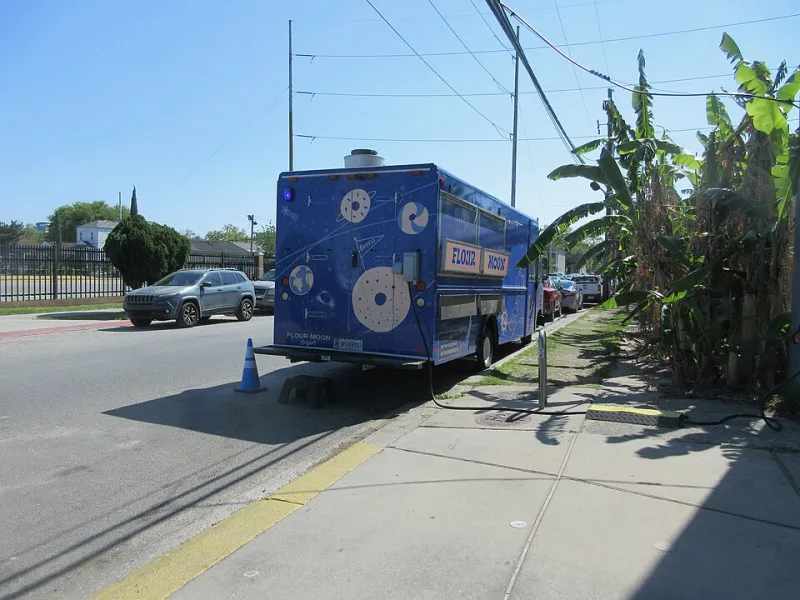
Photo: Infrogmation, CC BY-SA 4.0, via Wikimedia Commons
There's a bagel truck parked outside a Home Depot in Tempe, Arizona, every Saturday morning. The line wraps around a cart return. The baker — a former line cook from Queens who relocated three years ago — is pulling off an everything bagel stuffed with miso cream cheese and pickled daikon. It sells out by 10 a.m. Every single week.
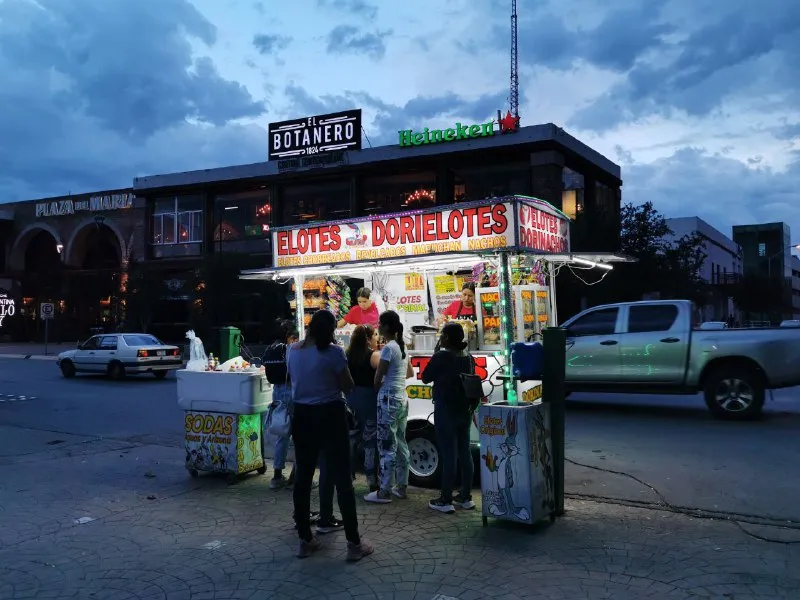
This isn't an anomaly. Across the country, a quietly radical movement is taking shape in the most un-glamorous real estate imaginable: food truck commissary lots, suburban strip mall end-caps, weekend pop-ups in converted shipping containers. These are the new bagel laboratories, and the experiments happening inside them are genuinely worth paying attention to.
Why the Unglamorous Address Is Actually the Point
High-profile bakeries carry high-profile expectations. When you're charging $6 a bagel in a beautifully tiled SoHo space, your customer base has a very specific vision of what they're walking in for. Deviation from the script — a bagel with za'atar and labneh, say, or a kimchi-lox situation — risks alienating the core audience that pays the rent.
Strip mall slots and food trucks don't have that problem. Overhead is dramatically lower, foot traffic is unpredictable anyway, and the customer who finds you in a parking lot off Route 9 is already primed for discovery. They're not expecting the canonical New York experience. They're curious.
That curiosity gives bakers room to breathe. And breathing room, as any serious baker will tell you, is where the good stuff happens.
The Science of Freedom: What Low Stakes Does to a Recipe
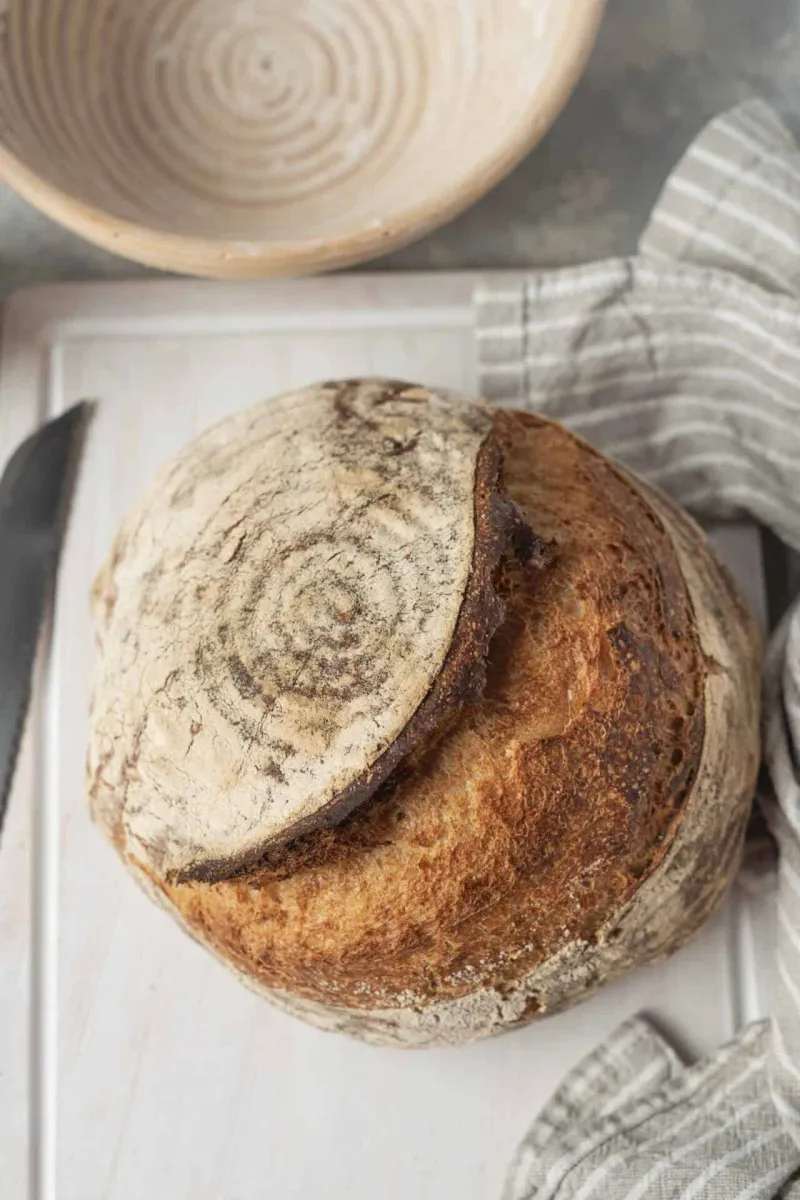
From a pure food science perspective, the unconventional bagel boom is producing some genuinely interesting technical evolution. Traditional New York bagel craft — high-gluten flour, cold fermentation, malt barley water boil, hearth bake — is a tight, unforgiving discipline. The variables are few, and mastering them takes years.
But when you remove the commercial pressure to replicate a known quantity, bakers start tinkering with those variables in ways that reveal surprising new possibilities.
Take fermentation. Several food truck bakers have been experimenting with longer, colder fermentation windows — sometimes pushing past 72 hours — that develop a sourdough-adjacent complexity without fully crossing into sourdough territory. The result is a chewier interior crumb with a subtle tang that doesn't overpower toppings. It's not a New York bagel. It's not a Montreal bagel. It's something new, and it was born out of the fact that the baker had time on his hands and no investors breathing down his neck.
Other operators are rethinking the boil itself. Traditional malt syrup in the water imparts that characteristic sheen and slight sweetness. But bakers working out of trucks in the Pacific Northwest have been testing honey-and-sea-salt boils, piloncillo-spiked water, and even brief beer wort baths that add a malty depth without the sticky sweetness. Each variation changes the crust behavior in ways that interact differently with toppings and spreads.
Flavor Fusion That Doesn't Feel Like a Gimmick
Here's the thing about the more adventurous flavor combinations coming out of these spaces: the best ones aren't novelty plays. They're thoughtful integrations of regional ingredient traditions with the structural logic of what a bagel actually is.
A bagel, at its core, is a vehicle. Dense, chewy, slightly salty — it's built to carry things. The New York tradition loaded it with lox, cream cheese, capers, and red onion because those were the flavors of the immigrant communities that invented it. The logic was always about community and ingredient availability, not some immutable sacred law.
So when a baker in Houston fills a jalapeño-cheddar bagel with a smear of chipotle cream cheese and a thin slice of brisket, she's not disrespecting tradition — she's extending it. The structural DNA is intact. The cultural DNA is local. That's exactly how food evolves.
Same goes for the Vietnamese-American baker in San Jose who's been doing a sesame bagel with scallion cream cheese and a thin layer of pâté chaud filling. Or the Somali-American couple in Minneapolis running a weekend pop-up with a cardamom-spiced bagel that pairs unexpectedly well with a honey-walnut spread. These aren't fusion for the sake of Instagram. They're bakers speaking their full culinary language through a form they've genuinely fallen in love with.
The Community Response Is the Real Story
What's striking about these operations isn't just the food — it's how neighborhoods receive them. Strip mall bagel spots, in particular, tend to become anchors in a way that's hard to manufacture. They're accessible. They don't feel intimidating. You don't need to know anything about artisan baking to walk up to a window and order.
And because these spaces are often embedded in communities that weren't on the traditional artisan food map — outer suburbs, mid-sized cities, working-class neighborhoods — the response carries a different kind of energy. People aren't just buying a bagel. They're claiming a food culture that previously felt like it belonged to someone else.
That's a big deal. One of the quiet tensions in the artisan bagel world has always been accessibility — both geographic and psychological. A $7 bagel in a minimalist Williamsburg shop sends a signal, intentional or not, about who the product is for. A $4 bagel from a truck in a strip mall parking lot sends a different one.
What the Establishment Can Learn
None of this is an argument against traditional New York bagel craft. The discipline, the technique, the insistence on doing it right — all of that matters enormously, and it's the foundation that makes any good bagel possible, whether it's coming out of a 40-year-old Brooklyn institution or a converted food truck.
But the strip mall and food truck scene is producing something valuable: proof of concept at scale. When a miso cream cheese bagel sells out every Saturday in Tempe, that's market research that no focus group could replicate. When a cardamom bagel finds a devoted following in Minneapolis, it tells you something real about appetite and community and the ongoing evolution of American food culture.
The best bagel shops — including the ones doing it right here in New York — should be watching these parking lot prophets closely. Not to copy what they're doing, but to understand what it means when a craft food form finds new life in unexpected hands.
The bagel has always been an immigrant story. It's always been about adaptation, survival, and feeding a community with what you have. The strip mall and the food truck are just the latest chapter in that very long, very delicious story.